

The demand for Ukrainian products is a conscious choice made by consumers. According to Gradus Research, 74% of Ukrainians buy domestic goods, and 37% actively try out new brands. In response to this demand, dozens of promising food brands emerge every year.
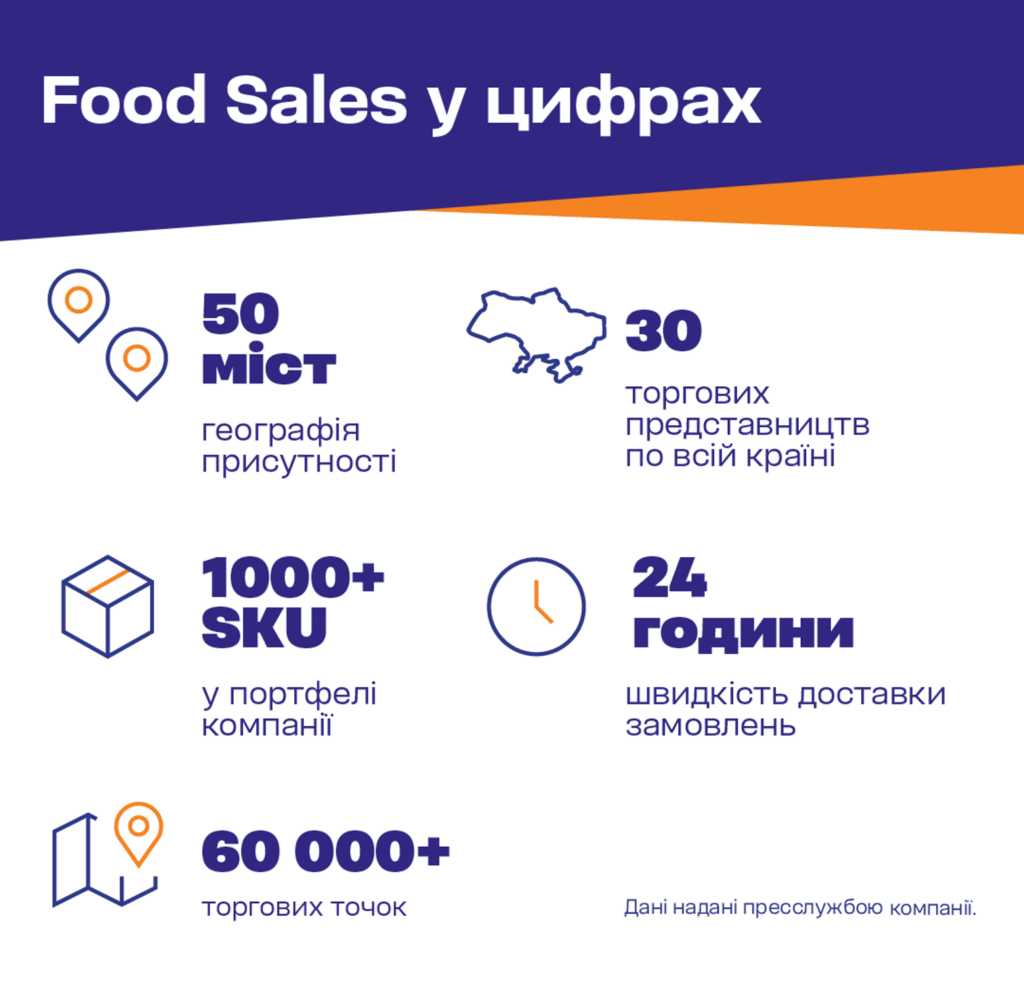
However, there is a huge gap between local success and a spot on national retail shelves: logistical dead ends, fierce competition, and a lack of operational experience. For over 20 years, Food Sales—a national distributor of FMCG goods (INSERT: Fast Moving Consumer Goods—everyday consumer goods: food, beverages, household chemicals, hygiene products, etc.) and a strategic partner of the Star Brands group of companies—has been helping to bridge this gap. Today, their network covers over 60,000 retail outlets: from the largest hypermarkets to neighborhood stores and gas stations.
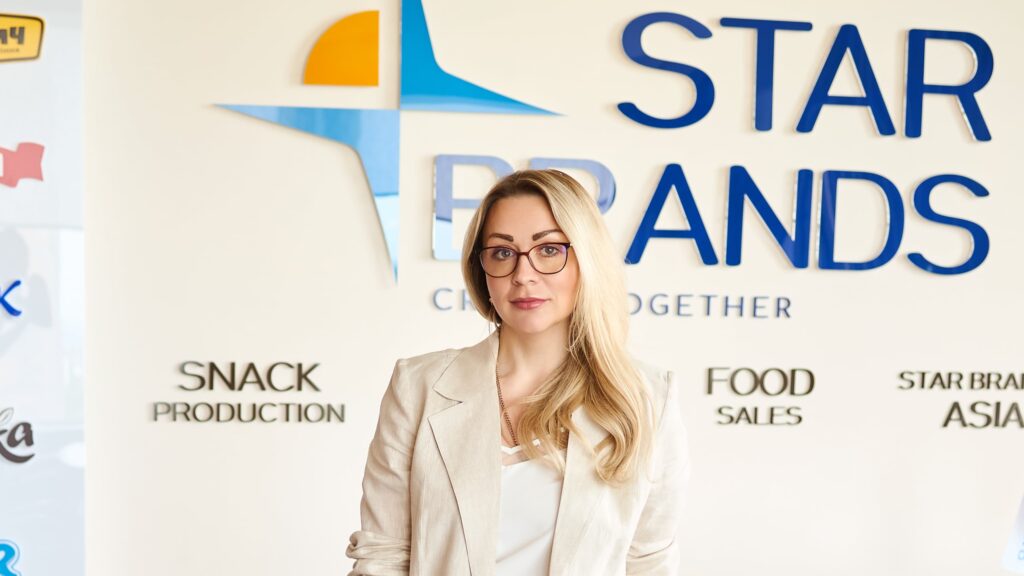
How does this system work from the inside, and what opportunities does it open up for Ukrainian manufacturers? Natalia Kramar, Head of the Food Sales Business Division, discusses this in an interview with Forbes BrandVoice.
A system that never stops: from the 2014 crisis to a synergy model
How did the idea to build such a large-scale distribution system come about?
The logic was simple: to effectively grow the business and promote our own brands, we needed to fully control the product’s journey to the shelf. That’s why we rolled out our own network of branches. Each branch is an autonomous mini-hub with its own warehouse, logistics, and administrative team. In general, Food Sales is a story of constant transformation through challenges.
The company faced its first major stress test in 2014. What happened then?
Due to a split in ownership, we suddenly lost half of our brand portfolio and sales team. It was a harsh blow, but it also brought a crucial realization: you cannot build a distribution network around a single manufacturer. We immediately changed our strategy and focused on diversification. In just the first year, we launched the “San Sanich” and “Chipster’s” brands, and to compensate for the loss of the team, we rolled out 23 new hubs in various cities across Ukraine in just one month.
The full-scale invasion brought even tougher challenges. How did you retool your processes?
The war struck at our most important asset—our people. Mobilization, emigration, and the occupation of territories. In response, we completely restructured our approach, creating a model of synergy. Partnerships with other distributors made us highly flexible and allowed us to instantly overcome staffing crises. And close cooperation with manufacturers ensures a broad portfolio and rapid replacement of items in the event of force majeure.
At the same time, Food Sales LLC is a key upholder of strict internal policies and quality standards: from R&D (Research & Development) technologies and methodologies (including technical specifications and technical data sheets) to marketing, HR standards, and licensing requirements. Any company can join us on a partnership basis, provided they strictly adhere to our standards. This model has allowed us to open branches in every region of Ukraine, and in some regions—several at once. For example, our hubs in Lviv and Drohobych help us plan routes so precisely that customers receive their goods within 24 hours.
Delivery within 24 hours in today’s Ukrainian reality is a huge challenge. How do you maintain this pace?
Speed is essential for us. The customer shouldn’t have to wait days for an order. Behind this efficiency lies ironclad process discipline. We strictly accept orders from 11:00 a.m. to 5:00 p.m. This strict timing allows the warehouse team to pick products on time and load vehicles without delays. Vehicles depart on their routes right on schedule.
Your portfolio includes over 1,000 SKUs. How many people are needed to effectively manage such a system?
It all depends on geography and sales volumes. For example, at the hub in Nikopol, five sales representatives are responsible for the region, while in Kyiv there may be over thirty.
Our representatives’ task is not just to monitor “gaps” on the shelves, but to build stable partnerships with the market. Of course, there is a huge team behind them: merchandisers, logistics specialists, operators, and accounting staff, where everyone is clearly responsible for their own stage of the process.
On Full-Cycle Partnerships: A Solution to “Customer Pain Points”
Who can become a partner of Food Sales, and what “pain points” do manufacturers most often bring to you?
We are open to almost any manufacturer, with the exception of alcohol and dairy products. Currently, our portfolio is structured as follows: 35% are third-party brands, and the rest are our own brands. We offer various collaboration formats: from creating dedicated teams to provide logistical support to deep collaborations in key categories.
The most common request from clients is to ensure a stable market presence, build a high-quality distribution network, and give the brand a systematic boost for growth. And here’s the key point: we’re looking for partners who are ready not just to “get on the shelf,” but to invest in their product with a long-term strategy.
What are the product evaluation criteria? What does it take to get into your portfolio?
The first and non-negotiable criterion is quality. We conduct rigorous blind tastings involving our sales and marketing teams. The market is competitive, so the decision is a collective one: we assess whether the product can “hold its own” on the shelf and whether the manufacturer can maintain quality standards during mass production.
Our job is to bring the product to the store and present it to the customer, but ensuring that the consumer comes back for it again is the manufacturer’s responsibility.
The second criterion is strategic vision. We need to clearly understand where the brand plans to be in 2–3 years. It is very important for us to share common values with our partner companies. Without a common denominator in values, cooperation usually fizzles out.
What does your full support cycle look like in practice—from the first contact to large-scale sales?
It all starts with synchronizing and defining each party’s areas of responsibility. Then a comprehensive system kicks in: product assortment development, distribution network mapping, marketing support, and in-depth sales analytics.
Today, it’s not enough to simply ship goods to a store; you need to continuously monitor sales and consumer response. We share our expertise: for young brands, a ready-made, working model often becomes a key factor for survival.
How long does it usually take to go from launch to national scale?
There’s no one-size-fits-all formula: it can take anywhere from two to five years or more. It all depends on the niche, product quality, and the manufacturer’s willingness to invest in development.
But there are also super-dynamic cases. For example, our collaboration with La Pasta Protein+ began in November 2025, and by May 2026, the product was already available in nearly 70% of national and local retail chains. This proves it best: the right distribution strategy scales a great product many times faster.
Business with no room for pause: investing in autonomy
Today, Ukrainian business operates in conditions of a permanent crisis. What anti-crisis solutions help you remain key market players?
Our main rule is to stay ahead of the curve. Even before power and communication outages became commonplace, we decided to make all our branches self-sufficient by purchasing generators and Starlink terminals. In 2022, these were massive investments that sparked debate within the team. However, the last generators arrived in September, and by October 9, the first large-scale attacks on the power grid had already begun. These investments paid off 100%: we maintained uninterrupted communication with our teams and locations, especially in frontline regions.
Ukrainian retail is changing at a breakneck pace. How do you see the company in 3–5 years?
The advantage will go to those players who combine quick decision-making, strong partnerships, and strategic vision. That is exactly what Food Sales is and will remain—a flexible, systematic platform that can adapt to changes and spot market niches before others do.
Professional Expertise
What advice would you give to a manufacturer who is still hesitating and thinking, “Maybe I can build a distribution network on my own”?
It is possible to build everything on your own. But usually, this costs the company more time, millions in financial losses, and painful mistakes. And time today is the scarcest asset.
Our role has long gone beyond simply delivering boxes. We offer our partners a ready-made ecosystem for rapid scaling. Food Sales LLC fully handles analytics, brand positioning, marketing, and support for production processes: from R&D methodologies to quality control.
Instead of spending years building infrastructure from scratch, manufacturers immediately gain three key advantages:
Nationwide coverage in Ukraine: thanks to a network of hubs in every region, we guarantee order delivery within 24 hours.
A highly flexible partnership model: synergy with other operators reliably protects the business from labor shortages and force majeure events.
Comprehensive expertise: we know exactly how to bring new products to the top.
Food Sales is your ticket to success. Even a small regional brand can bypass years of operational chaos and transform into a powerful, recognizable national-level player in just 5–7 years.